


Introduction
In modern education and corporate training, round tiered classrooms are revolutionizing how we learn and collaborate. Unlike traditional rigid layouts, these spaces prioritize interaction, visibility, and flexibility—making them ideal for universities, training centers, and conference halls. In this guide, we’ll explore 5 core principles to design a high-impact round tiered classroom that boosts engagement and productivity.
1. Spatial Layout: Balance Form & Function
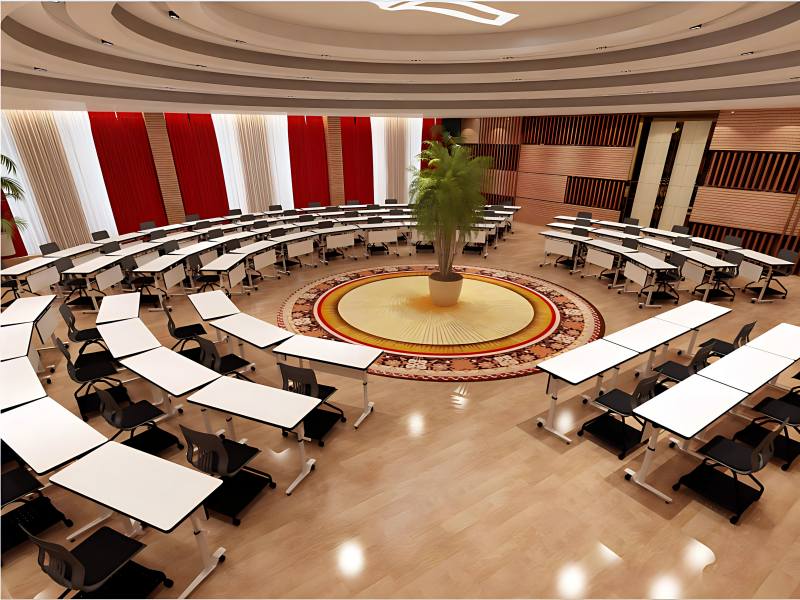
The circular layout should center around a focal point (e.g., a projector, whiteboard, or green space like the potted plant in your image). This draws attention to the instructor while keeping all seats visible.
• Seating Radius: Ensure a 360° clear view by calculating the optimal distance between rows (typically 1.2–1.5 meters for comfort).
• Central Zone: Reserve 3–5 meters in diameter for flexible use (e.g., group discussions, tech setups, or decorative greenery).
2. Acoustics & Lighting: Enhance Focus
Tiered classrooms demand careful acoustic treatment to avoid echo and ensure every voice is heard.
• Acoustic Panels: Install sound-absorbing panels on curved walls (matching the room’s circular design).
• Layered Lighting: Combine ambient (ceiling fixtures), task (desk lamps), and accent (spotlights on the central zone) lighting to reduce eye strain.
3. Furniture: Flexible & Ergonomic
Choose furniture that adapts to multiple teaching styles (lecture, workshop, debate).
• Modular Seating: Use stackable, mobile chairs (like the training chairs in your image) with attached desks for easy reconfiguration.
• Ergonomic Design: Prioritize chairs with lumbar support and adjustable heights to reduce fatigue during long sessions.
4. Technology Integration: Future-Proof the Space
Modern classrooms rely on seamless tech integration.
• Interactive Displays: Mount a large touchscreen or projector at the center for collaborative work.
• Wireless Connectivity: Ensure robust Wi-Fi and charging ports at every seat for digital learning tools.
5. Aesthetics: Create an Inspiring Atmosphere
A visually appealing space bos motivation anostd focus.
• Color Palette: Use warm neutrals (beige, light wood) for walls and floors, with bold accents (red curtains, patterned rugs) to energize the room.
• Biophilic Design: Incorporate plants (like the central palm) to improve air quality and reduce stress.
Conclusion
A well-designed round tiered classroom isn’t just about looks—it’s about creating an environment where learning and collaboration thrive. By balancing spatial logic, technology, and aesthetics, you can transform any room into a dynamic hub for education or business. Ready to start your project? Contact our team for a free consultation and custom design plan!


